
BepiColombo Reaches Mercury: The Engineering Breakthroughs Redefining Deep-Space Exploration
From NASA’s pioneering Mercury missions to Britain’s ion propulsion technology and Japan’s advanced scientific instruments.
2026-11-25 | The Wright Brothers News
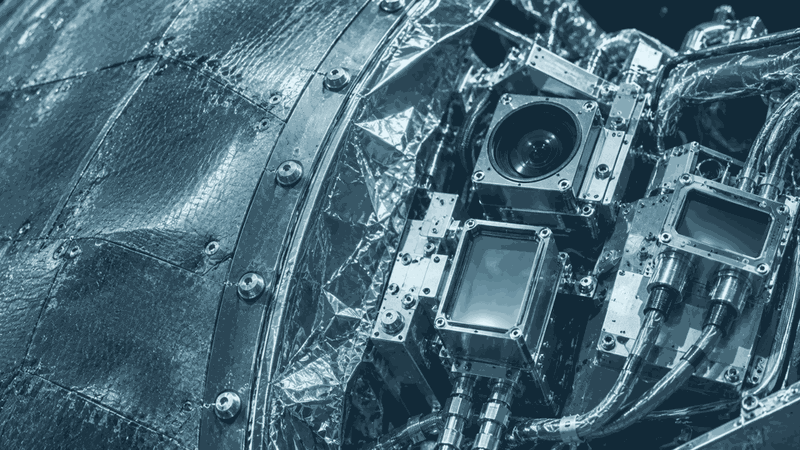
The European-Japanese BepiColombo mission has entered Mercury’s orbit after an eight-year journey, demonstrating how scientific research, industrial engineering and international collaboration can create new capabilities.
Beyond NASA’s pioneering achievements
Mariner 10 investigated Mercury in the 1970s. MESSENGER became the first spacecraft to orbit the planet in 2011, transforming understanding of its magnetic field, geology and polar environment. BepiColombo builds on that legacy with two complementary orbiters: Europe’s MPO and Japan’s Mio.
A breakthrough in gravitational navigation
Weak stability capture exploits gravitational interactions to approach Mercury at relatively low speed. When a software problem interrupted the planned engine burn, the spacecraft nevertheless entered a 75-hour orbit rather than the intended 58-hour orbit. Mission controllers adapted the remaining manoeuvres. Engineering must account for failure as well as normal performance.
British ion propulsion
QinetiQ’s T6 technology draws on the heritage of the T5 thruster used aboard ESA’s GOCE gravity mission. Electric propulsion offers high propellant efficiency but low thrust. Integrating it with chemical propulsion and gravitational navigation offers important lessons for future space transportation.
Innovation beyond spacecraft manufacturing
Japan’s advanced plasma-wave measurements and European surface instruments demonstrate the value of specialised engineering. Materials, autonomous control, scientific computing and precision sensors may have relevance beyond space, although commercial transfer requires validation. The future belongs not simply to nations manufacturing every component independently, but to those creating indispensable technologies and integrating knowledge across borders.
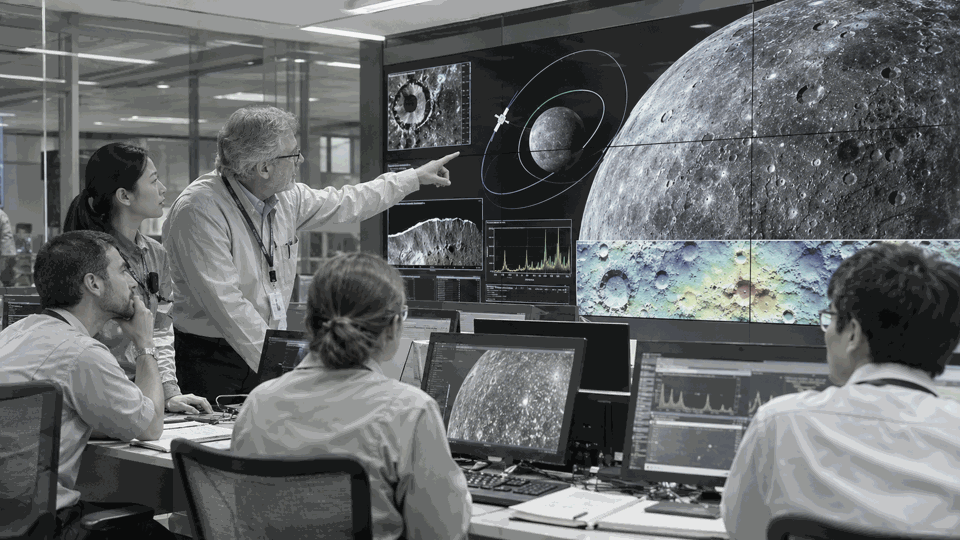
The Wright Brothers News
JAXA https://mio.isas.jaxa.jp/
ESA https://www.esa.int/Science_Exploration/Space_Science/BepiColombo
NASA https://science.nasa.gov/mission/messenger/
Airbus https://www.airbus.com/en/products-services/space/space-exploration/bepicolombo
Kanazawa University https://www.kanazawa-u.ac.jp/
Tohoku University https://www.sci.tohoku.ac.jp/
Kyoto University https://www.kyoto-u.ac.jp/
DLR https://www.dlr.de/
ASI https://www.asi.it/
INPE https://www.gov.br/inpe/
ISRO https://www.isro.gov.in/
BRIN https://brin.go.id/
KARI https://www.kari.re.kr/
VAST https://vast.gov.vn/
Comments