
August 17, 2026 | The Wright Brothers News
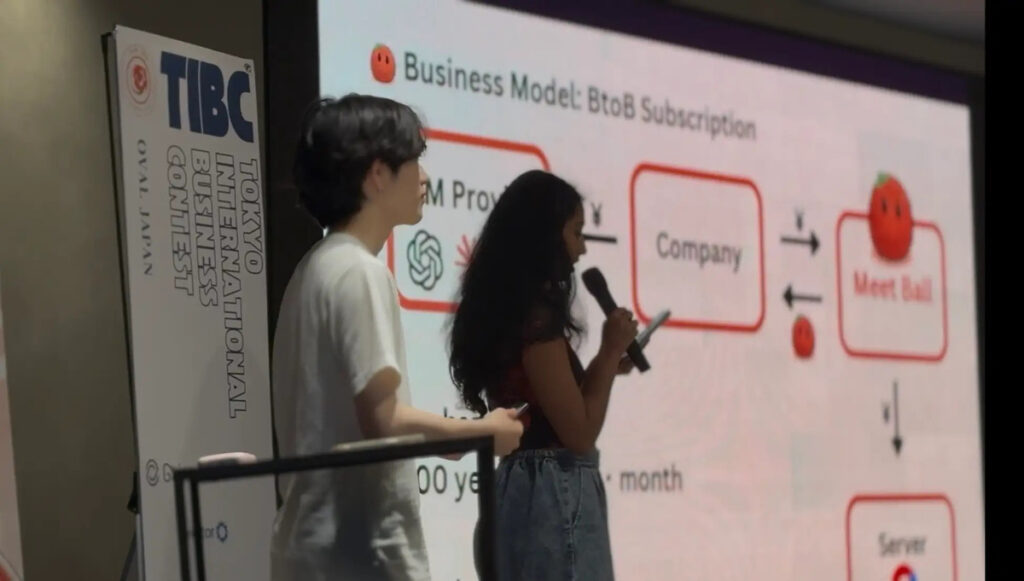
What happens if you take three college students—
one from Japan,
one from China,
and one from South Korea—
put them on the same team,
make them live and work together for almost a week,
tell them they can only use English,
and then ask them to build a business good enough to beat everyone else in the room?
You get something very different from a typical student exchange program.
You get IBC — the International Business Contest.
From August 19 through August 25, 2026, students from Japan, China and South Korea are scheduled to gather in Tokyo for IBC 2026, organized by the student-run organization OVAL JAPAN.
The competition returns to Japan after three years.
And behind the business plans, presentations and competitive pressure lies a much bigger experiment:
Can the next generation of East Asian leaders learn to disagree with one another before they are asked to lead?
OVAL has spent more than two decades trying to find out.
For Americans, imagine a case competition, a startup sprint and an international exchange program compressed into one week
American college students are familiar with several versions of competitive learning.
Business-school case competitions.
Startup weekends.
Hackathons.
Pitch competitions.
Model United Nations.
Study-abroad programs.
IBC contains elements that may feel familiar to all of them.
But the combination is unusual.
Students from Japan, China and South Korea are selected through their respective national organizations.
According to OVAL JAPAN, past participants have included students from institutions such as Peking University, Tsinghua University and Seoul National University, alongside students from Japanese universities.
Then comes the crucial rule.
A team consists of:
one Japanese student,
one Chinese student,
and one South Korean student.
Three people.
Three national backgrounds.
One business plan.
And one working language:
English.
For all three, English may be a second language.
There is nowhere to hide behind the ease of one’s native tongue.
This is not diplomacy
That distinction matters.
The students are not being asked to negotiate territorial disputes.
They are not representing governments.
They do not arrive with national policy positions.
IBC deliberately concentrates the competition around business.
Teams have to identify problems, develop ideas, evaluate markets, organize a business model and ultimately present their proposal.
That gives them something concrete to fight about.
Is the customer real?
Does the business model make sense?
Who pays?
How big is the market?
Is the idea financially viable?
Is the presentation convincing?
Those arguments can become intense.
And that is exactly the point.
This is not a program built around everyone politely agreeing.
There are winners and losers.
The plans can be compared.
Teams compete.
Participants want to win.
OVAL’s own description of IBC emphasizes business planning, consulting from professionals, presentations and competition among teams.
In other words:
friendship is possible, but competition comes first.
And perhaps that is why the friendship can become real.
The interesting part is not when they agree
It is when they don’t.
Imagine being 20 years old.
You have known your teammates for only a few days.
One grew up in Japan.
One in China.
One in South Korea.
You are tired.
The deadline is approaching.
Your business model is falling apart.
Someone thinks the target customer should change.
Someone else thinks the entire idea is wrong.
A third person believes the problem is not the idea but the presentation.
Now explain yourself—
in English.
Not the English from a standardized test.
Not the English used to order coffee abroad.
English as a tool for:
persuasion,
frustration,
negotiation,
leadership,
apology,
and compromise.
That is a very different kind of language education.
Americans might recognize the “case competition” culture — but the team design changes everything
At many American universities, students compete in case competitions by analyzing a real or hypothetical business problem and presenting recommendations to judges.
IBC shares some of that DNA.
But imagine a U.S. case competition where the organizers intentionally prevented you from choosing your friends.
Instead, they paired:
an American student,
a Chinese student,
and a Korean or Japanese student,
then required them to live together while building the solution.
The challenge stops being purely analytical.
Suddenly, the team itself becomes part of the case.
How do you persuade someone whose assumptions are different from yours?
How do you lead without dominating?
How do you criticize an idea without insulting the person?
How do you make a decision when no one has enough vocabulary to express every nuance perfectly?
How do you build trust quickly?
These are not just business-school skills.
They are leadership skills.
Why Japan, China and South Korea?
From an American perspective, East Asia is often discussed through massive numbers.
Trade.
Semiconductors.
Supply chains.
Military alliances.
Population.
Technology.
GDP.
But countries do not meet one another.
People do.
Japan, China and South Korea are geographically close and economically deeply connected.
They also have very different languages, political systems, social environments and historical memories.
That makes cooperation both natural and difficult.
OVAL’s answer since its beginning has been surprisingly practical:
Don’t begin by asking young people to solve the hardest political questions in East Asia.
Give them something they can build together.
A business.
A presentation.
A deadline.
A team.
Then see what happens.
OVAL: “Our Vision for Asian Leadership”
The name itself contains the mission.
OVAL — Our Vision for Asian Leadership.
OVAL JAPAN states that its purpose is to connect students from Japan, China and South Korea through international business competitions and develop the next generation of global leaders.
The Japanese organization began in 2003.
OVAL CHINA and OVAL KOREA followed in 2004, and the first competition was held in Tokyo in 2005.
Since then, programs have moved among cities in Japan, China and South Korea.
That means some of today’s participants were not even born when the experiment began.
The organizers are students too
This is another part American readers should understand.
OVAL JAPAN is not a corporate training company designing a student program from a downtown Tokyo office.
The people building much of the program are themselves university students.
OVAL JAPAN includes students from universities such as the University of Tokyo, Waseda University, Keio University and Sophia University, while its official recruitment information makes clear that membership is not limited to those institutions.
They recruit participants.
Coordinate with China and Korea.
Plan events.
Secure partners.
Build competition rules.
Arrange programs.
Handle logistics.
And then pass responsibility to the next generation.
For the student organizers, therefore, IBC is itself a leadership laboratory.
They are not only teaching leadership.
They are being forced to practice it.
The pandemic tested the entire idea
OVAL’s model depends heavily on one old-fashioned technology:
putting human beings in the same room.
COVID-19 disrupted that.
Programs moved online.
OVAL’s history records online international contests and online cross-border programs during the pandemic period.
But in 2023, IBC returned to Tokyo as an in-person international program.
In 2024, the competition moved to Korea.
In 2025, it went to Shanghai.
And in 2026, the cycle brings IBC back to Tokyo.
After years in which an entire generation learned that almost anything could be done through a screen, OVAL continues to insist that some things are different face to face.
It is harder to walk away from disagreement.
Harder to misunderstand someone and simply close the laptop.
Harder to reduce another person to a national stereotype once you have eaten breakfast with them.
That last point may be more important than the business plan
Americans know how quickly countries become abstractions.
“China.”
“Japan.”
“Korea.”
Each word can carry hundreds of millions of people inside it.
News coverage inevitably compresses them further.
Governments.
Presidents.
Markets.
Conflicts.
Statistics.
Then a student sits across the table from another student and discovers something inconvenient:
a country is not a person.
The Chinese teammate has a favorite song.
The Korean teammate gets nervous before presentations.
The Japanese teammate is stubborn about the pricing model.
Someone snores.
Someone loses their phone charger.
Someone is homesick.
Someone makes the entire team laugh at 2:00 a.m.
International understanding often begins in embarrassingly ordinary places.
The goal is not to erase differences
This distinction is essential.
Real international exchange should not result in three students thinking exactly alike.
That would defeat the point.
The Japanese student should not become Chinese.
The Chinese student should not become Korean.
The Korean student should not become Japanese.
The objective is not sameness.
It is the ability to say:
“I still disagree with you. Now I understand why.”
That sentence may be one of the most important leadership skills in the world.
There is even dedicated time to study one another’s cultures
IBC includes Culture Study, giving participants opportunities to learn more directly about Japan, China and South Korea.
OVAL’s related Staff Exchange Program also includes cultural-study sessions alongside business activities and organizational meetings.
That matters because a business disagreement is not always only about business.
Communication styles differ.
Ideas about hierarchy differ.
People interrupt differently.
Silence can mean different things.
The way someone says “no” may differ.
The way someone challenges a senior person may differ.
The way a person expresses certainty may differ.
A global leader who cannot recognize those differences can mistake culture for personality.
And personality for hostility.
In America, we often call this “cross-cultural leadership”
It sounds impressive on a résumé.
But it is much less glamorous in real life.
Cross-cultural leadership might mean realizing that your joke didn’t land.
It may mean asking someone to explain their point a second time.
It may mean discovering that what sounded “passive” to you was intended as politeness.
Or that what sounded “aggressive” was intended as efficiency.
It means being willing to ask:
“Am I actually hearing this person, or am I interpreting them entirely through my own culture?”
IBC forces students to ask versions of that question under pressure.
That’s what makes it useful.
Leadership training without the title
American college culture can sometimes make leadership look like a collection of positions:
President.
Founder.
Captain.
Chair.
Director.
But a title does not automatically produce a leader.
Put three strangers in a room with a deadline and you quickly discover who can:
listen,
organize,
persuade,
change their mind,
keep the team moving,
and restore trust after conflict.
That is leadership before the title.
And that may be one reason OVAL alumni have gone on to prominent careers.
OVAL JAPAN points to former participants and organizers who later entered entrepreneurship and business leadership.
But the larger point is not whether every participant becomes a famous founder.
Most won’t.
The question is whether they leave with a different way of working with people.
IBC is only one part of the system
OVAL JAPAN has expanded its programming beyond the main international competition.
One example is TIBC — Tokyo International Business Contest, a domestic competition designed partly as a pathway toward the international experience.
Students work in English, develop business plans and receive feedback through competition-style programming.
OVAL also runs the SEP — Staff Exchange Program, where staff members from Japan, China and South Korea gather to prepare for future programs, study one another’s cultures and compete in business sessions themselves.
The result is interesting:
participants compete,
but organizers compete too.
Everyone is being trained.
The next challenge is scale
There is an obvious limitation.
A one-week immersive international program can be transformative.
But only a limited number of people can be in the room.
That raises a question OVAL now has to confront after more than two decades:
How do you scale an experience whose value comes precisely from being small and intense?
Videos can reach thousands.
Social media can reach millions.
But watching Japanese, Chinese and Korean students argue together is not the same as being the person who has to answer them.
The difficulty of IBC is also the source of its value.
That tension may define OVAL’s next 20 years.
What America could learn from this experiment
The United States has some of the world’s most internationally connected universities.
American campuses bring together students from nearly every country.
But physical diversity does not automatically create meaningful interaction.
It is entirely possible to study beside people from dozens of countries and never build anything difficult together.
IBC offers a useful idea:
Don’t only bring different people into the same place. Give them a shared problem they cannot solve alone.
That changes everything.
Diversity becomes useful when difference is required.
If every teammate thinks exactly like you, you may work faster.
But you may also miss what only someone else could see.
Yesterday: diversity. Today: what it looks like under pressure.
The Wright Brothers News has spent these days thinking about diversity.
It is easy to celebrate diversity when everyone is smiling for a group photograph.
The harder test begins when people disagree.
When the deadline is close.
When someone refuses your idea.
When communication fails.
When you are tired.
When your teammate says:
“No. I think you’re wrong.”
Can you remain at the same table?
Can you listen?
Can you argue?
Can you change your mind?
Can you still respect the person afterward?
If the answer is yes,
then diversity has begun to become something more meaningful than representation.
It has become cooperation.
On August 19, Tokyo becomes a small laboratory for East Asia
For one week, a relatively small group of students will not solve the relationship between Japan, China and South Korea.
That would be an absurd expectation.
They will do something much smaller.
And perhaps more realistic.
They will meet.
Eat together.
Argue.
Build.
Fail.
Revise.
Present.
Compete.
Laugh.
Become frustrated.
Learn names.
Discover differences.
And eventually go home.
Years later, one may become an entrepreneur.
Another a corporate executive.
Another a researcher.
Another a public servant.
Another may choose a completely different path.
But somewhere in their memory will remain a week when “Japan,” “China” and “Korea” stopped being only countries.
They became teammates.
Maybe that is how international leadership actually begins
Not at a summit between presidents.
Not with a carefully prepared diplomatic statement.
Not with everyone pretending differences do not exist.
Maybe it begins much earlier.
Three students.
One table.
One deadline.
One business plan.
And an argument serious enough that everyone has to reveal what they really think.
Then—
instead of walking away—
they keep working.
That is not world peace.
It is much smaller than that.
But every bridge has to begin somewhere.
And in Tokyo this August,
some of them may begin with a spreadsheet, a whiteboard and three exhausted college students trying to agree on a business model before morning.
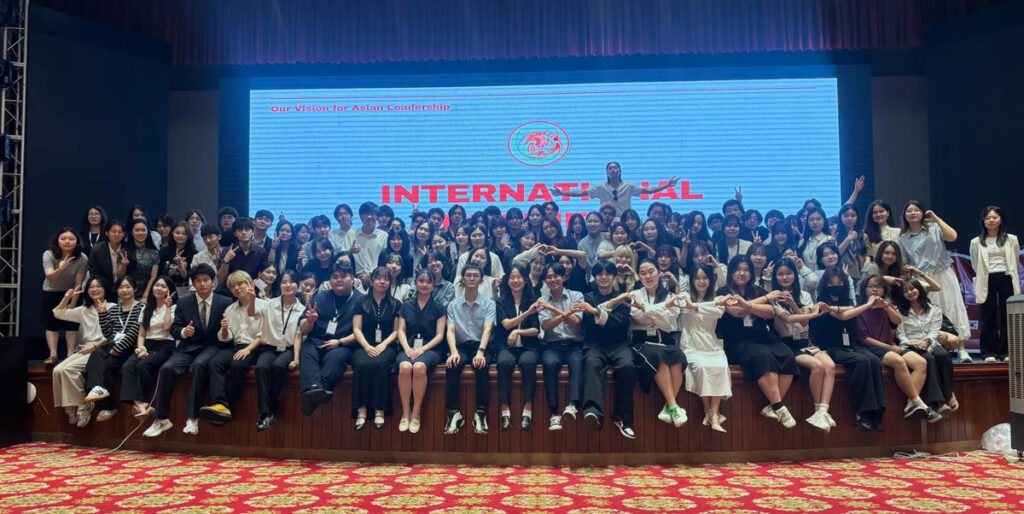
Editor’s Notes
What is OVAL JAPAN?
OVAL JAPAN is a student-led organization connecting university students from Japan, China and South Korea through international business competitions and exchange programs.
The name OVAL represents “Our Vision for Asian Leadership.”
Its stated goal is to develop the next generation of global leaders through dialogue and collaborative experiences across East Asia.
When was OVAL founded?
The Japanese organization began in 2003.
OVAL CHINA and OVAL KOREA were established the following year, and the first competition was held in Tokyo in 2005.
What is IBC?
IBC stands for International Business Contest.
Participants from Japan, China and South Korea form multinational teams and develop business plans primarily in English.
OVAL’s official materials describe programs involving business lectures, planning, consulting with working professionals and final presentations.
Which universities participate?
OVAL states that participants have included students from leading institutions such as Peking University, Tsinghua University and Seoul National University, while the Japanese organization includes students from a variety of universities.
OVAL JAPAN explicitly states that its staff membership is not restricted to the University of Tokyo, Waseda, Keio or Sophia and that students from various institutions participate.
Where and when is IBC 2026?
According to the 2026 announcement provided by OVAL JAPAN, IBC 2026 is scheduled for August 19–25, 2026 in Tokyo, at the National Olympics Memorial Youth Center.
OVAL’s official site also confirms that the organization’s 2026 plans include IBC in Tokyo.
What are TIBC and SEP?
TIBC — Tokyo International Business Contest is a Japan-based business competition connected to OVAL JAPAN’s broader leadership-development activities.
SEP — Staff Exchange Program brings OVAL staff from Japan, China and South Korea together for organizational preparation, cultural study, interaction and business-related sessions.
Why does OVAL emphasize face-to-face interaction?
IBC moved through online and hybrid periods during the COVID-19 era, but the organization resumed international in-person programming afterward.
OVAL’s own descriptions repeatedly emphasize that direct collaboration among people with different nationalities and values develops team building and leadership in ways that are difficult to reproduce through ordinary classroom learning.
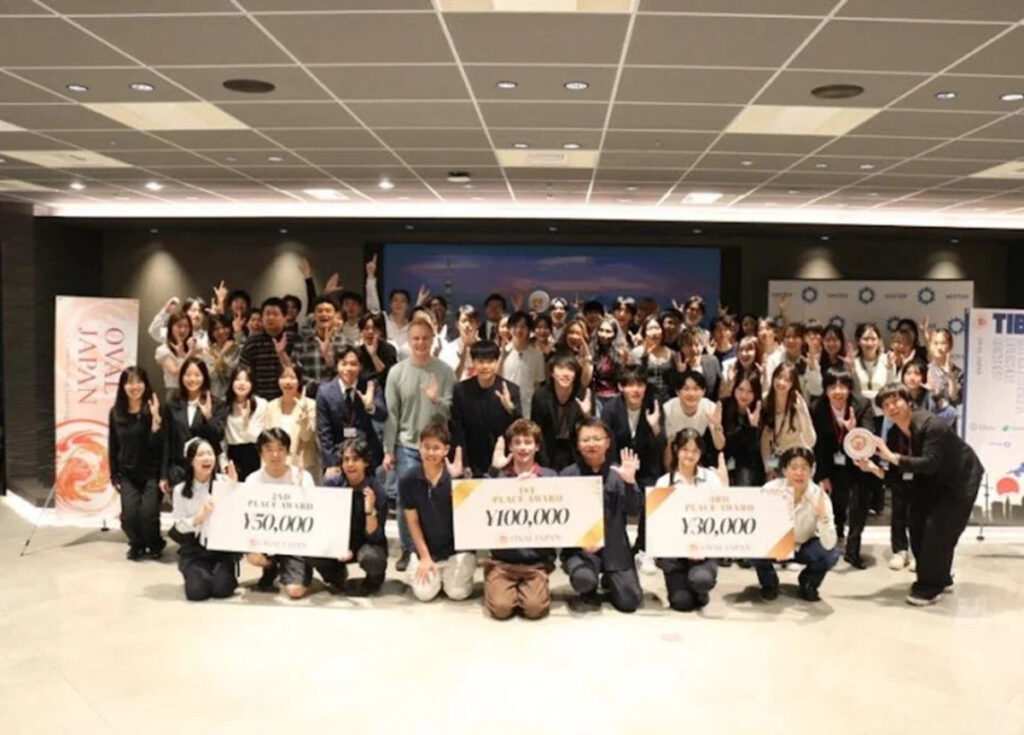
Supporting IBC 2026
OVAL JAPAN is seeking support for its activities through crowdfunding as well as corporate and organizational sponsorship.
Students and organizations interested in the project can find further information through OVAL JAPAN’s official channels.
Official organization: OVAL JAPAN
Mission: Our Vision for Asian Leadership
2026 IBC: Tokyo, Japan — August 19–25, 2026
Comments